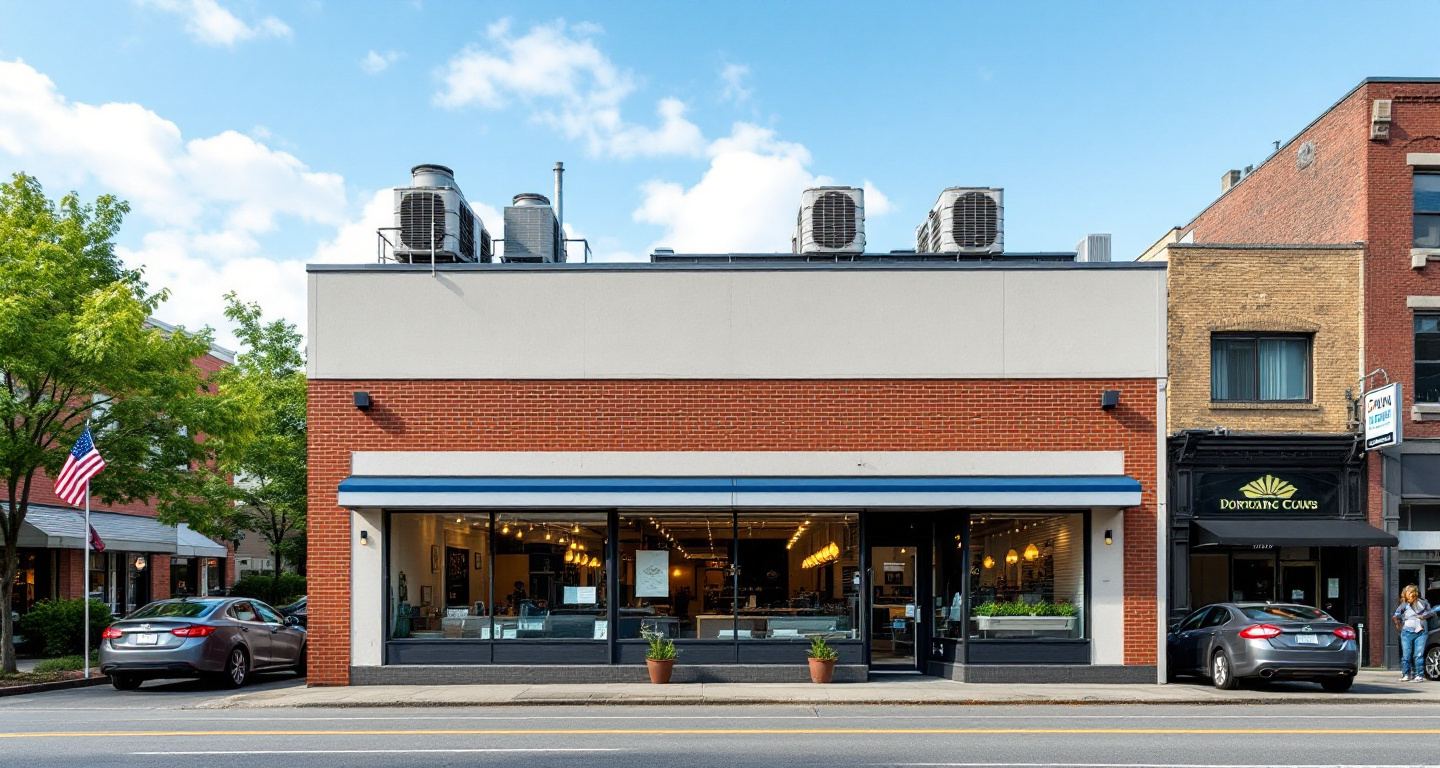
How Commercial HVAC Differs From Residential
The most visible difference is what sits on the roof. Most Portland commercial buildings rely on rooftop units, commonly called RTUs, rather than the split systems you would see behind a house. An RTU packages heating, cooling, and often the air handler into a single cabinet that sits outside and out of the way — important when interior mechanical space is tight. These units are engineered for hard use and long cycles, but they are expensive to replace and require different maintenance expertise than residential equipment.
The second major difference is zoning complexity. A home might have two or three zones. A commercial space often has many more, because the people and activities in a business building are rarely distributed evenly. A restaurant has a hot kitchen and a dining room that need different treatment. A dental office has treatment rooms, a waiting area, and sterilization spaces with entirely different load profiles. An open-plan office with a server closet must account for constant heat generation in one corner. Designing and maintaining this kind of system requires thinking about occupancy patterns and internal loads that never come up in residential work.
Ventilation is the third dimension. Commercial buildings in Oregon are governed by mechanical codes that set minimum fresh-air requirements based on occupancy type and square footage. These affect permitting, air quality, and how your system is designed and balanced. A code-compliant commercial ventilation setup is doing more work than a residential one — actively managing the ratio of return air to outside air, often with controls that respond to occupancy or carbon dioxide levels. A general overview of HVAC systems is in this reference on HVAC.
The Pacific Northwest Commercial Context
Portland sits in a marine climate, which means most of the year the weather is genuinely mild. For a long time, that let commercial property owners underinvest in cooling and get away with it. That window has narrowed. The summers in the Willamette Valley have produced heat events that expose how many buildings were designed for a statistical average that no longer holds. A building that coasts through most summers can still hit dangerously high indoor temperatures during a heat dome, and the business consequences — employee health, customer experience, perishable inventory, equipment reliability — are real.
Heating in the Portland commercial context is usually less dramatic. Winters are wet and cool rather than brutal, and many light-commercial buildings here run heat-pump-based systems that handle both functions efficiently within the mild temperature range. Oregon's energy code has become increasingly stringent, and new or substantially renovated commercial buildings face efficiency requirements that push owners toward modern equipment even when older units could keep running. The code reflects real efficiency gains in newer equipment, but it also means replacement decisions carry compliance implications that a residential job would not.
What This Guide Covers
The sections that follow are written for a small-business or property owner who needs working knowledge, not an engineering credential — to help you ask better questions, evaluate contractor proposals with more confidence, and avoid the most common and expensive mistakes.
The guide walks through rooftop unit basics — what they do, how they age, and what your equipment is telling you before it fails. It covers maintenance contracts, which in a commercial context are genuinely different from residential service agreements and deserve careful scrutiny. There is a section on efficiency and Oregon's energy code requirements, which affect both renovation projects and like-for-like replacements more than most owners realize. Replacement planning gets its own treatment because the lead times and coordination demands of a commercial HVAC replacement are significantly greater than swapping out a residential system — and businesses rarely have the luxury of time when equipment fails during peak season. Finally, the guide addresses how to evaluate and choose a commercial HVAC contractor in the Portland market, including what qualifications actually matter versus what amounts to marketing language.
None of this replaces a qualified mechanical engineer or licensed contractor. It is a foundation for the conversation you will have with them — so that when you sit down to discuss your building, you are not starting from zero. For a local example of commercial HVAC services in the Portland area, see https://sites.google.com/view/efficiency-heating-cooling/services/commercial-hvac.