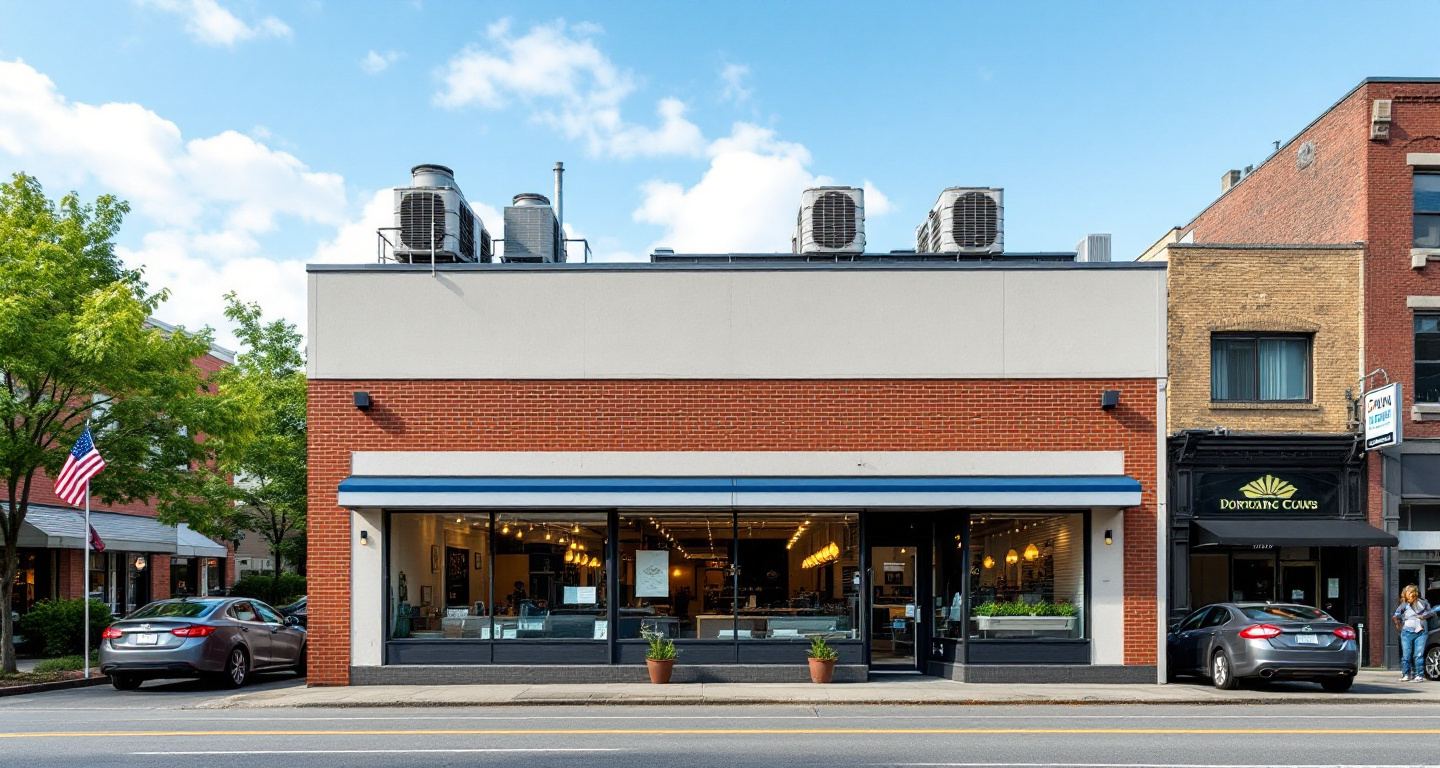
Ventilation and Fresh Air Requirements for Occupied Spaces
Commercial buildings are required to bring in a minimum volume of outdoor air relative to the number of people occupying the space and the type of activity taking place. An office where people sit at desks has different requirements than a fitness studio or a restaurant kitchen. This is a code-enforceable standard, not a guideline, and it applies to any occupied commercial space in Oregon.
The rationale is straightforward. People exhale carbon dioxide and generate contaminants through cleaning products, equipment off-gassing, or ordinary activity. Without sufficient fresh air, those concentrations build over the course of a day. Staff may notice fatigue or difficulty concentrating before anyone identifies the cause. Customers in a stuffy retail space often leave sooner than they would otherwise.
What this means practically is that your HVAC system needs to be sized and configured to meet fresh-air targets, not just to condition the air already inside. Systems that were adequate under a previous use, or that have been modified without professional review, may no longer deliver what code requires. If you have changed the occupancy type or increased the density of people in your space, a mechanical contractor can verify that your ventilation is still compliant. Ventilation and indoor-air-quality guidance is in the EPA introduction to indoor air quality.
Indoor Air Quality Beyond Minimum Ventilation
Meeting the ventilation minimums gets you to the baseline, but thinking about air quality more broadly often produces real operational benefits. Upgrading to a higher-rated filter can reduce particulate matter — dust, pollen, fine debris — without a full system replacement. The tradeoff is increased static pressure; a mechanical professional can tell you whether your existing equipment can handle an upgrade without hurting airflow.
In spaces with known air quality sources — print shops, auto service bays, nail salons — local exhaust at the point of generation is often part of a code-compliant design rather than an optional add-on. Oregon's damp winters also make humidity management worth considering; moisture accumulation over time can damage finishes and create conditions that affect air quality independently of ventilation.
Energy Efficiency Opportunities in Commercial HVAC
HVAC systems typically represent a substantial portion of a commercial building's utility costs, making them one of the most productive areas to examine when trying to reduce operating expense.
Economizer systems allow a unit to bring in outdoor air for cooling when outside conditions are favorable, reducing or eliminating compressor operation during those periods. Portland's climate, with its long shoulder seasons and relatively mild summers, is well-suited to economizer performance. A properly functioning economizer can reduce cooling energy noticeably during months when outdoor temperatures are moderate.
Controls upgrades offer another common opportunity. Older commercial systems often operate on simple schedules or respond to a single thermostat. Modern building controls can stage equipment based on actual occupancy and zone the building more precisely. A building conditioned to full occupancy standards in the middle of the night is wasting energy that translates directly into cost.
When equipment reaches the end of its service life, the replacement decision is also an efficiency decision. Current-generation equipment is meaningfully more efficient than units installed a decade or more ago. Oregon utility rebate programs and federal tax incentives tied to commercial energy improvements can offset a portion of replacement costs — the specifics change, so consulting a tax advisor alongside a mechanical contractor is worthwhile. Heat-pump efficiency background is at https://www.energy.gov/energysaver/heat-pump-systems.
Permits, Inspections, and Oregon Code Requirements
Commercial HVAC work in Oregon is subject to permitting and inspection requirements that do not apply to residential work. Any significant installation, replacement, or alteration of a commercial mechanical system generally requires a mechanical permit from the relevant jurisdiction. In Portland, that means working through the city's permitting process. Work must be performed by licensed contractors and inspected by a code official before it is considered complete and compliant. The permit process exists to verify that work meets the Oregon Mechanical Specialty Code, which governs commercial HVAC design and installation statewide.
As a building owner, the practical implication is that any contractor you hire should pull the required permits and complete the inspection process. Unpermitted commercial mechanical work creates liability and can complicate insurance claims, lease negotiations, and building sales. Contractors who are straightforward about permitting are easier to work with and provide a cleaner paper trail for the life of the building. For a local example of commercial indoor-air-quality service in the Portland area, see https://sites.google.com/view/efficiency-heating-cooling/services/air-quality.